

APOCALYPSE FRAME - Beyond Five Minutes Transcript
The transcript for Episode 6 of Beyond Five Minutes: APOCALYPSE FRAME from Binary Star (Binary Star Games).
BEYOND FIVE MINUTESTTRPGS
Daniel Copper
2/1/20265 min read
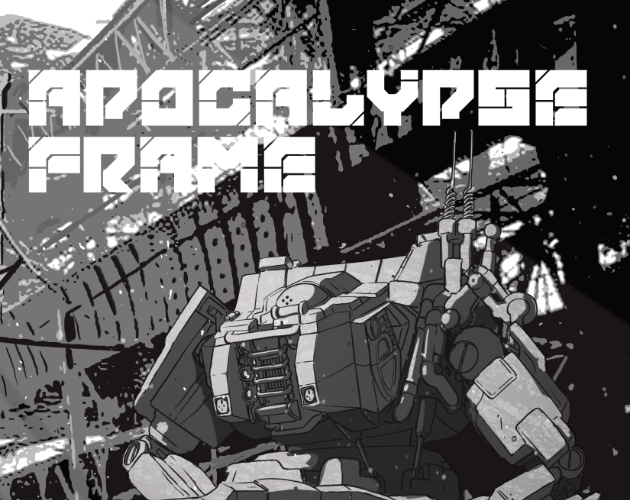
A thumbnail image for APOCALYPSE FRAME from Binary Star (Binary Star Games), with art by Galen Pejeau.

Transcript
DANIEL COPPER: Welcome to Beyond Five Minutes, where we delve a little deeper into the games discussed in Five Minutes, Not 5e. My name is Daniel, otherwise known as The Copper Compendium, and I’ll be your host. On this episode, we’re expanding on my chat with Binary Star about APOCALYPSE FRAME.
Let’s begin by talking about the bones of the game. This game is built on an SRD, or System Reference Document, essentially the core mechanical structure of a game made for others to expand upon, called LUMEN. What drew you to the system, and how does APOCALYPSE FRAME expand on and deviate from it?
BINARY STAR: So, LUMEN is an interesting one as SRDs go. Many SRDs are a set of mechanics that expect you to throw a coat of paint on it. LUMEN on the other hand is designed as more of a verbalised philosophy of making power-fantasy games and a toolbox for that means, and that sense of purpose really attracted me to it. Because of this, everyone who makes a LUMEN game necessarily deviates from what’s laid out in the SRD, simply because there isn’t really a set core, aside from a handful of things, like how to roll and some key concepts.
The most notable ways in which I deviated were the resources which expand economy in different ways depending on [the] mech.
DANIEL: Balancing combat is notoriously difficult in any game, TTRPG [Tabletop Role Playing Game] or otherwise; in some games balance is foregone altogether. APOCALYPSE FRAME has some very interesting solutions to balancing, particularly around action economy (how many actions each side in an encounter can take), enemy health, and boss fights. How did you go about creating that balance?
BINARY: LUMEN comes from a developer, Spencer Campbell of Gila RPGs, who famously does not care at all about balance. I’m a bit more measured on it but what I wanna emphasise is that balance isn’t a design goal so much as it can be a means to an end.
Here the balance isn’t between players and enemies as much – your players will absolutely wreck most of what you put in front of them. My emphasis is less on “do you survive” and more “do you succeed”. The balance here is making every kind of character able to feel overpowered in different ways: lighter mechs can act a lot but are much more vulnerable, whereas heavier mechs can more readily utilise more powerful weaponry and utilities and soak more damage.
The exception to this heavy imbalance is with boss enemies. Prime enemies always have at least 2 healthbars, so they can’t be focused down too quickly. In the advanced rules, Tyrants are that but nastier – they can react to or even pre-empt player actions.
DANIEL: It’s very hard to kill a player character in this game, but that doesn’t mean they can’t be harmed. Frame damage might be one of my favourite takes I’ve encountered of making death feel impactful without being a conclusion. How does it work, and what are the consequences of your frame taking a beating?
BINARY: So, frame damage is a 3-strikes-you’re-out kind of situation. The first 2 times represent a serious hit of some sort – you’ll take some kind of meaningful mech damage that will give a penalty of some kind going forward. On the third time though you’re presented with a choice. You can always punch out of your mech, just eject and have your character stay alive… but sometimes that’s not how you want it to go down. Sometimes your character has got exactly one more thing to say, so as an alternative to that you can activate a last stand in which you get a massive boost to everything for one final glorious turn. At the end of that turn, though, your character is gone, with no hope of coming back.
DANIEL: This game has some of the best support for running the game I’ve seen in my time reading and running TTRPGs. I was particularly impressed with how the systems promote interesting campaign structure, how it encourages player collaboration in campaign setup, and how smooth the GM side of combat is. Could you talk a little about the process of making the GM tools?
BINARY: Well thank you! Player collaboration is something I like to encourage in every game I run, whether or not the game tells you to. Players care more about a setting and a situation they’ve opted into by the act of setting it up in my experience. So a lot of starting a campaign is creating your little rebellious collective, you all decide what manner of empire it was rebelling from together, and what it generally looks like. But crucially, a collective is only as good as the people in it, so along the way you’ll also come up with all sorts of colleagues and friends and rivals, and their presence shapes how you think of the collective in your mind.
Campaign structure and scaffolding is also an extremely important thing to me. I like games that have the ability to stick around, even if a lot of people are only going to run it for a session or two, and I think that flexibility to decide to just keep going on a game is an extremely distinguishing factor of the hobby, so I wanna support it.
One of the biggest influences on that front was the 2011 XCOM reboot and the way it struck a balance between routine missions, terror missions, and preset missions for the council. I similarly came up with a balance between normal missions, crisis missions that involve something going very wrong, and moonshot missions that involve a major victory. Using a series of interlocking counters, just by going through the procedure in the book you’ll trigger various kinds of missions at varying rates. You have a constant cadence of upgrading your mech’s equipment from mission to mission but you’ll also get more substantial upgrades after moonshot missions. And, in those advanced rules, once players get a little complacent, there are rules on how to start upgrading enemies when crisis missions occur.
DANIEL: Thank you again, Binary, for chatting with me about APOCALYPSE FRAME. Where can people find you, and your games?
BINARY: My website is at binarystar.games, you can find my digital shop at binary-star-games.itch.io, and my shop for physical copies [is] at shop.binarystar.games. I’m also either at binarystargames or binarystar.games on various social media.
DANIEL: You can find those links, as well as links to the transcript of this episode and links to the game, in the video description. If you want to find games with similar themes or gameplay to this one, there will also be links to relevant playlists.
And that brings us to the end of the expanded interview! Beyond Five Minutes is an expansion of Five Minutes, Not 5e, so if you’ve not heard my previous discussion with Binary about the game, you can find it linked in the end screen and description.
Thank you for listening, until next time!
[End of transcript.]
Links
The Game and its Designer
Get the game (digital copy): https://binary-star-games.itch.io/apocalypse-frame
Get the game (physical copy): https://shop.binarystar.games/products/apocalypse-frame
Check out Binary's games on itch.io: https://binary-star-games.itch.io/
Check out Binary's webstore: https://shop.binarystar.games/
Check out Binary's website: https://binarystar.games/
Follow Binary on Bluesky: https://bsky.app/profile/binarystar.games
Follow Binary on Tumblr: https://www.tumblr.com/binarystargames
Relevant (YouTube) Links
APOCALYPSE FRAME - Five Minutes, Not 5e: https://youtu.be/1C5Yt-OiPD0
APOCALYPSE FRAME - Five Minutes, Not 5e Transcript: https://thecoppercompendium.co.uk/apocalypse-frame-five-minutes-not-5e-transcript
Mech: https://www.youtube.com/playlist?list=PLsLJ-CI8A8CDmSF6_cbtLwIse7gjdq-KG
Sci-Fi: https://www.youtube.com/playlist?list=PLsLJ-CI8A8CDvKvmt8I4Bc-Mj7qYGE18v